
We are here to help you find the right Chartered Surveyor
Buying a property ranks among the most significant financial decisions most people make in their lives.
A thorough understanding of the various survey levels available helps buyers protect that investment.
In the United Kingdom the Royal Institution of Chartered Surveyors sets clear standards for residential surveys. The framework delivers predictable accurate and actionable information for purchasers.
The current RICS framework divides residential inspections into three clearly defined levels. The levels differ according to inspection thoroughness report content and the nature of the building under review. The right level is determined largely by how old the house is how it was built its current condition and any unusual features. A chartered surveyor is well placed to recommend the correct level once the details of the property have been considered.
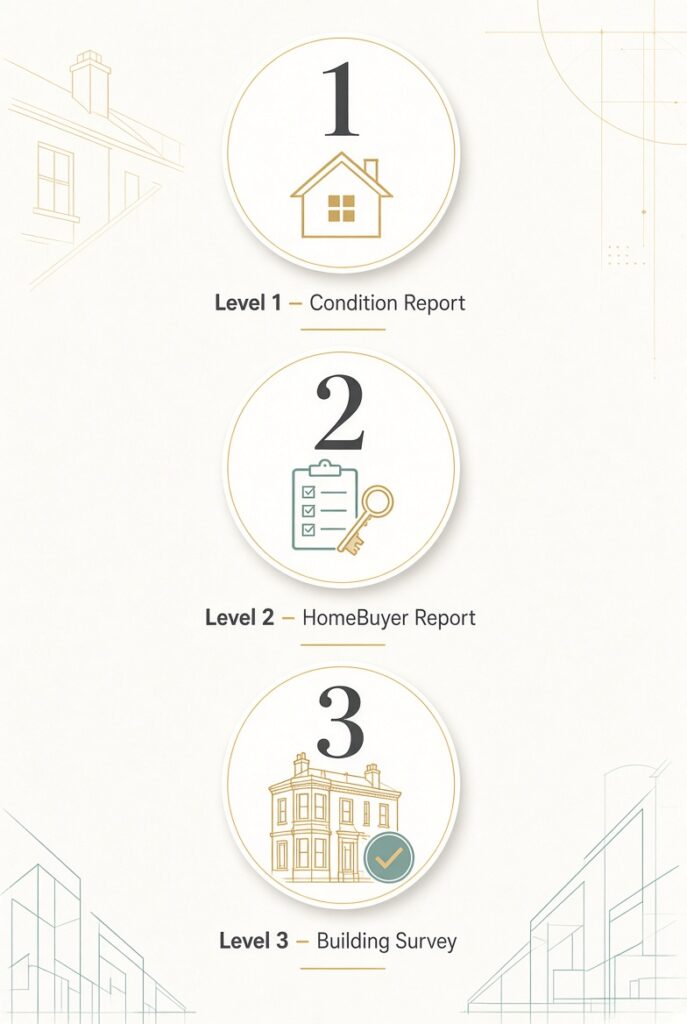
The Level 1 survey previously termed a Condition Report offers a straightforward summary of the dwelling’s state.
It is intended mainly for newer conventional properties that appear to be in good order. The surveyor inspects accessible surfaces and structures then applies condition ratings of one two or three. Neither repair recommendations nor a valuation form part of the Level 1 output. Most purchasers therefore view this level as suitable only for brand-new or near-new straightforward dwellings.
The popular Level 2 option earlier termed the HomeBuyer Report serves most buyers of typical houses and flats.
It targets standard houses and flats that are reasonably maintained and free from extensive modification. A thorough visual check of accessible areas is undertaken together with practical advice on repairs and upkeep. The same colour-coded system is employed yet the additional commentary enhances its usefulness. An optional market valuation and reinstatement cost for insurance purposes can also be included.
Level 3 once called the Building Survey delivers the fullest analysis of a property’s condition and construction.
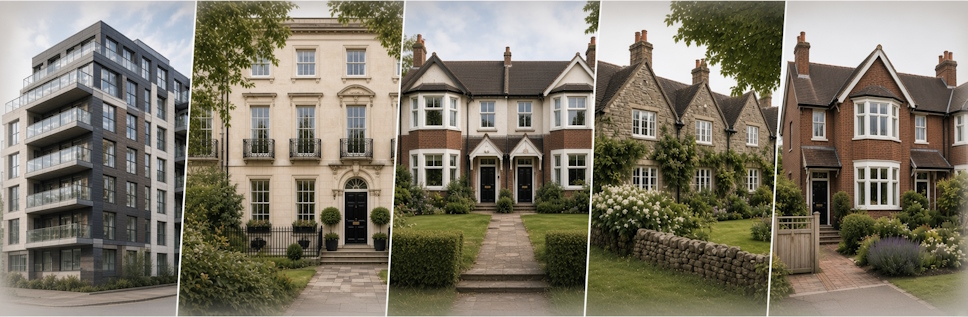
Buyers of older unusual listed or substantially extended properties are generally steered toward this level. The professional allocates additional time to scrutinise both visible and reasonably accessible concealed elements. The resulting report analyses construction methods defects their likely causes implications and repair options in detail. The thoroughness of the survey delivers superior security whenever risk or uncertainty is pronounced.
Key distinctions among the levels
The differences concern investigative thoroughness the volume of guidance offered and the properties for which each is intended. Level 1 provides ratings alone while Level 2 supplies actionable advice together with optional valuation services. The highest level intensifies scrutiny and offers narrative explanation of causes effects and repair strategies. Fees and inspection duration rise steadily across the three levels in line with the expanding scope of the survey. An appropriate choice weighs the specific features of the home against the depth of analysis and peace of mind desired.
Employing a Chartered Surveyor who is a member of the RICS is essential
Achieving and retaining chartered status involves intensive training examination and lifelong compliance with RICS rules. They work independently of estate agents and lenders and therefore provide unbiased advice focused solely on the client’s interests. Mandatory professional indemnity cover offers additional security if mistakes or oversights arise in the survey documentation. Expertise integrity and external oversight combine to render the RICS chartered surveyor indispensable for these services.
Commissioning the correct level from a skilled chartered surveyor can expose matters that would otherwise emerge post-completion. With the information in hand purchasers may seek a price reduction ask for remedial works or decide to abandon the deal. The relatively small fee for a proper survey should be regarded as money spent on peace of mind rather than a discretionary expense. In circumstances of significant property values and potentially expensive remedial work the survey almost always proves worthwhile. In the final analysis knowledge of the distinct survey levels combined with the use of a chartered surveyor underpins a careful property acquisition across the UK.